


The Wonder Woods: The "Third Teacher"
- Robert Shaffer

- Dec 15, 2025
- 3 min read
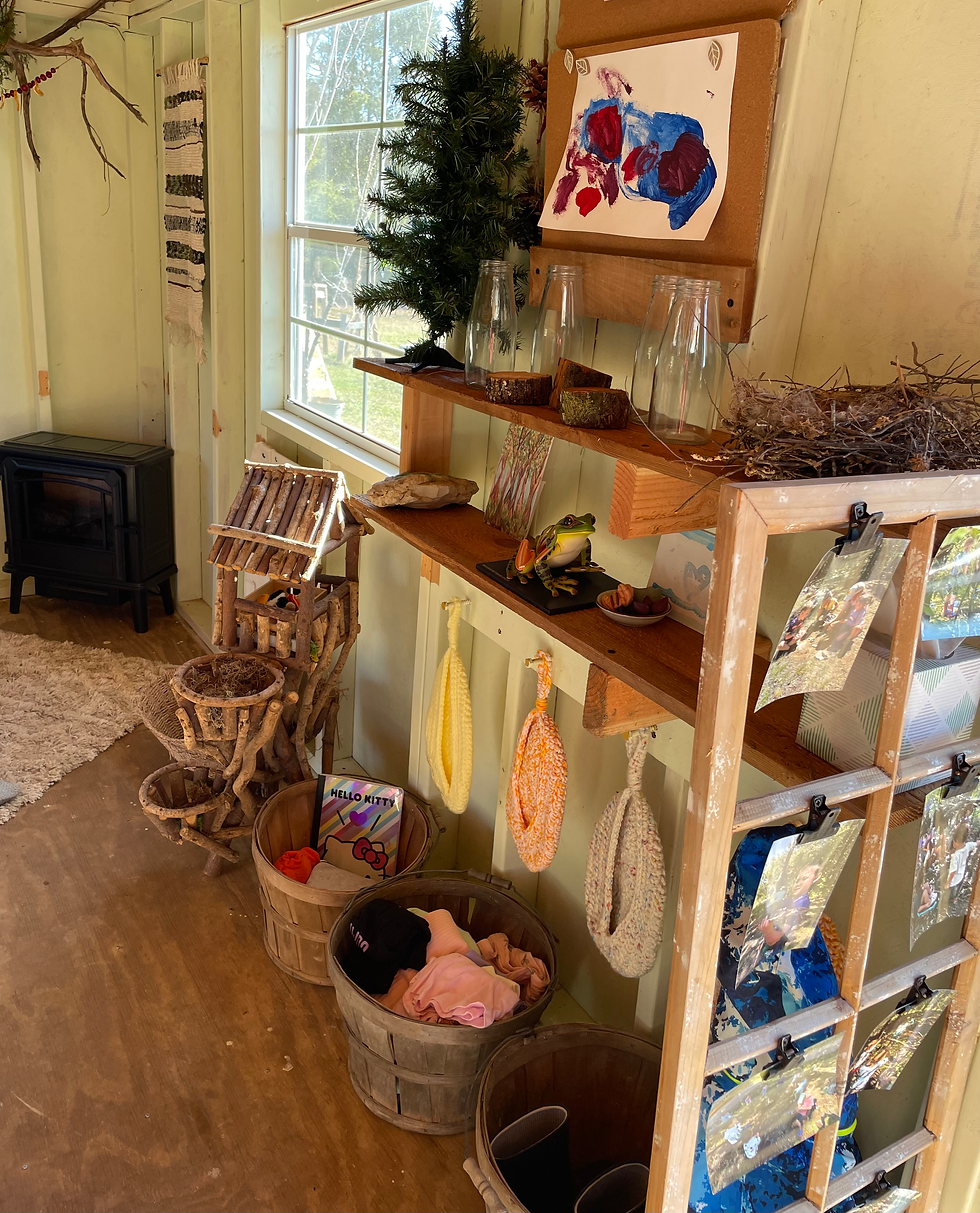
At the beginning of my Forest School journey a few years ago, I didn't focus much of my cognitive energy on setting up indoor spaces, as Forest Schools are mainly outdoor programs. However, after learning that the design of indoor spaces, even if used minimally throughout the day, can significantly impact children's emotions and behavior, This concept of the environment as the "Third Teacher,* as described in the Reggio Emilia approach, led me to reevaluate how I design my indoor spaces, even for a mostly outdoor program! Now, as the weather gets colder, the children in our program, whom I refer to as Forest School learners, will inevitably spend some time indoors. This indoor time provides them with an opportunity to warm up after their outdoor adventures and engage with materials without the disruption of wind, rain, and biting cold. Let me show you around our indoor space, the big red shed, i.e., "Base Camp".

Intentional Choice and Display of Materials: Everything in our indoor areas is deliberately selected to fulfill one or more functions. The colors are mainly browns, tans, and soft pastels, which contribute to a calming atmosphere. Only the materials we want the children to access are displayed at the children's height. In this picture, there are materials for exploration (pinecones, dried oranges, moss, etc.) on the lower shelves. The materials placed above children's height are meant to inspire questions, curiosity, or awe for their natural beauty. The materials on the uppermost shelves are for teacher use, when they set up the space for the day's play.
Spaces for Individual and Group Play:
In all of the pictures featured in this blog, you'll see a range of "small spaces" designed for individual learners and small groups to play. Learners can choose where to play, but similar to the Montessori method, there is a limited selection of materials available at any given time. This approach helps children develop patience and problem-solving skills. The "small spaces" themselves offer variety; some areas require standing, others require sitting, and some involve sitting on pillows on the floor.
Natural Materials: The space predominantly uses natural materials like cotton cloth, moss, grass fiber rugs, and wood. This indoor environment provides learners with a sense of shelter from the weather, allowing them to engage more closely and enthusiastically with natural materials. We've observed that the confidence gained from working with these materials translates to the Forest Exploration part of our program, where learners utilize forest materials to enhance and extend their play while outdoors.
The Art Studio


The Art Studio offers a variety of open-ended materials designed to ignite curiosity about possible creations. Displayed above is the table commonly utilized for painting or "messy" projects. You'll notice that the watercolor paints are set up for learners to collaborate on projects side by side. Typically, there is a model or some form of inspiration to spark ideas for what the learners might create. They have the option to follow the model's example or to design something independently. The models usually align with the current inquiry the children are exploring.


*The Third Teacher
Similar to the Reggio Emilia approach, we hold the belief that children learn from their peers and adults (the first two teachers), as well as from their surroundings (the third teacher). By intentionally crafting a serene, comfortable, and inviting setting, we empower our learners to be more engaged, encouraging them to inquire, explore deeply, and establish connections with the world around them.
With much gratitude for warmth and joy on this cold day,
Rob Shaffer,
Oakview Farm Forest School Director


Comments